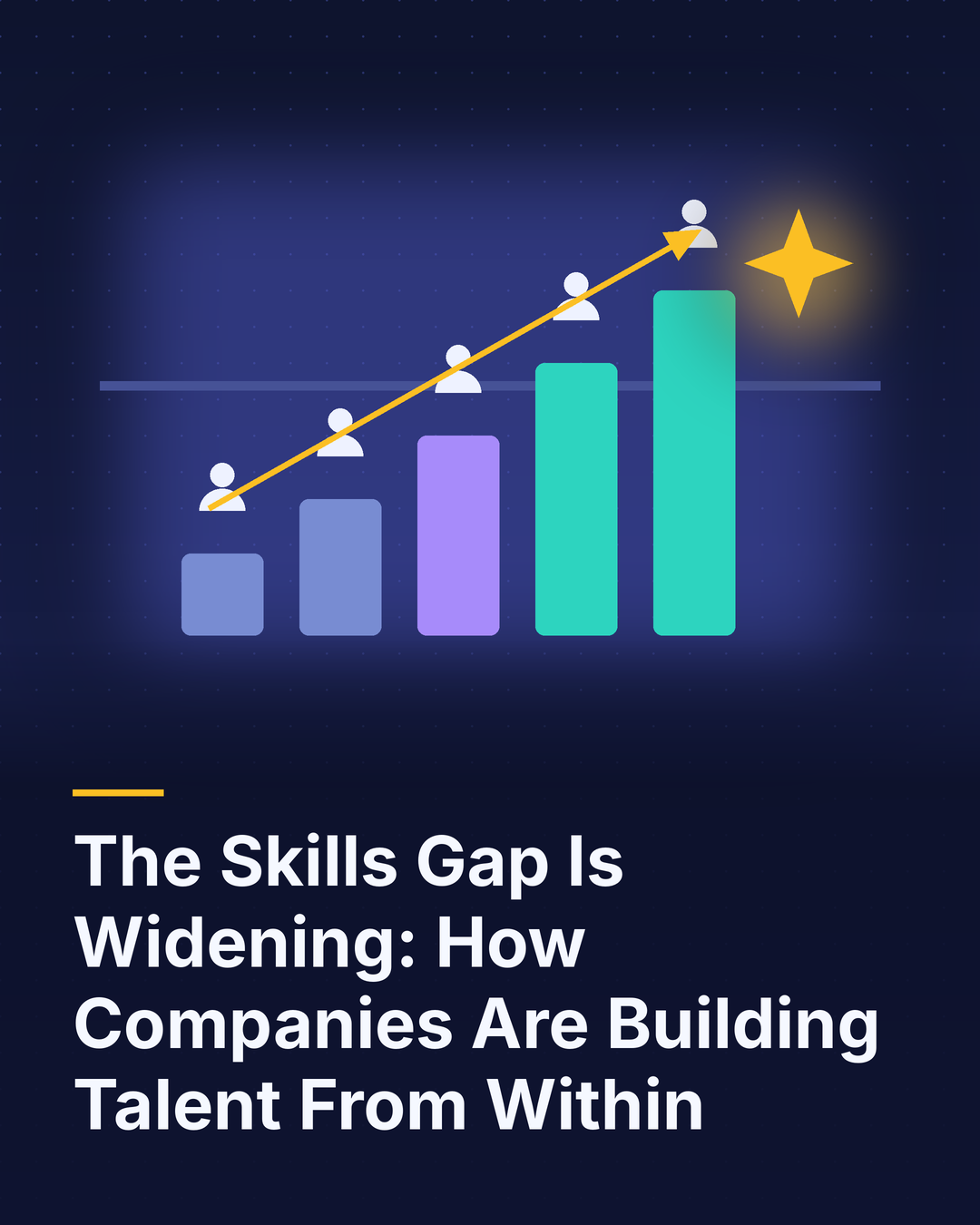
The Skills Gap Is Widening: How Companies Are Building Talent From Within
When I played college ball, our coach had a saying: you don’t win championships in the transfer portal, you win them in the gym. Recruiting stars helps, sure. But the teams that stayed great year after year were the ones that developed their own players.
I’ve been thinking about that a lot lately, because businesses are facing their own version of the same choice. The skills gap in tech is real, and it’s growing. AI, cloud, cybersecurity and data roles are evolving faster than the hiring market can keep up. The good news? More and more companies are discovering that some of their best future talent is already on the roster.
Why the Gap Keeps Growing
A few forces are working together here. Technology is changing faster than ever, so skills that were cutting-edge three years ago now feel like table stakes. Generative AI alone has reshaped job descriptions across nearly every department. Meanwhile, the pool of experienced candidates for specialized roles hasn’t grown nearly fast enough, which means longer searches, bidding wars and plenty of open reqs sitting unfilled.
Trying to hire your way out of that situation is expensive and slow. And even when you land the perfect candidate, the skills you hired for today may need a refresh next year.
The Case for Growing Your Own
Building talent from within flips the script. Instead of hunting for unicorns, companies invest in the people who already know the business, the customers and the culture. Here’s why that approach is gaining momentum:
- Faster ramp-up. Internal candidates already understand how things work, so they become productive in new roles much sooner.
- Better retention. Employees who see a clear path to grow are far more likely to stick around.
- Lower cost. Training an existing employee is often significantly cheaper than recruiting, onboarding and ramping an external hire.
- Stronger culture. Nothing says “we believe in you” like investing in someone’s future.
What Successful Programs Have in Common
The companies doing this well tend to share a few habits. They start by mapping the skills they’ll need over the next few years, not just the roles they need to fill today. They identify employees with adjacent skills, like an IT support specialist with a knack for security, or an analyst who’s curious about machine learning. Then they provide structured learning paths, often combining online courses, hands-on projects and mentorship, that lead to recognized credentials.
Crucially, they also create real opportunities at the end of the path. Learning is motivating when there’s a new role, project or promotion waiting on the other side.
The Bottom Line
The skills gap isn’t going away anytime soon, but companies don’t have to sit on the sidelines waiting for the market to fix it. By identifying high-potential employees, building clear learning pathways and backing them with real career opportunities, organizations can develop the talent they need from within. It’s faster, more affordable and a whole lot better for morale. And just like in sports, a team that develops its own players builds something that lasts well beyond a single great season.