
AI Sourcing vs. Recruiter Judgment: Finding the Right Balance
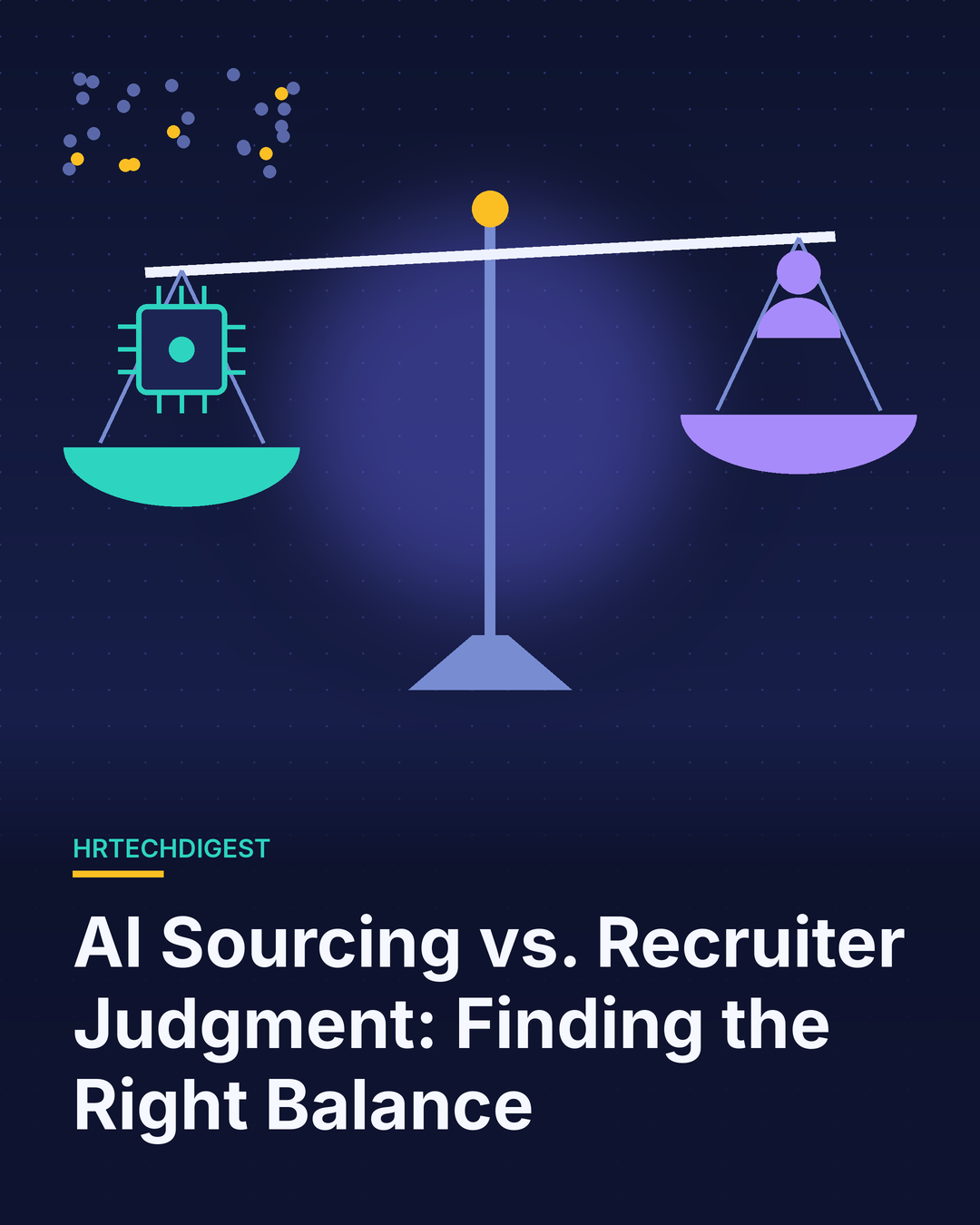
AI sourcing tools have transformed the top of the recruiting funnel. They can scan millions of profiles, infer skills from work history, rank candidates against a job description and draft personalized outreach in seconds. For talent teams under pressure to fill roles faster with fewer recruiters, the appeal is obvious.
But speed at the top of the funnel doesn’t guarantee better hires. The organizations getting the most from AI sourcing are those that have clearly defined what the machine should do and where recruiter judgment remains essential.
What AI does better than people
Scale and speed. No recruiter can review thousands of profiles in an afternoon. AI can, surfacing qualified candidates a manual search would never reach.
Finding non-obvious talent. Skills-based matching can identify candidates with relevant capabilities but unconventional titles, career changers or people from adjacent industries. Used well, this widens the talent pool beyond the usual networks.
Rediscovering past applicants. Most ATS databases are full of strong candidates who were runners-up for previous roles. AI can resurface them automatically when a new role opens.
Personalizing outreach at volume. Drafting tailored messages that reference a candidate’s background lifts response rates compared with generic templates, while freeing recruiters from repetitive writing.
What recruiters do better than AI
Understanding the real requirements. Job descriptions are often wish lists. Recruiters who talk with hiring managers learn what the role actually needs, which requirements are flexible and what kind of person will succeed on the team.
Reading motivation and fit. Whether a candidate is genuinely open to a move, what would make them say yes and how they’ll mesh with a team are signals that emerge in conversation, not in profile data.
Building relationships. Top candidates usually have options. They respond to recruiters who listen, advise honestly and advocate for them. Automated sequences can open a door, but relationships close hires.
Spotting what the data misses. Career gaps, nonlinear paths and unusual backgrounds can look like red flags to an algorithm. An experienced recruiter recognizes potential that doesn’t fit a pattern.
The risks of over-automation
AI models trained on past hiring decisions can reproduce past biases, filtering out qualified candidates from underrepresented groups. Many jurisdictions now regulate automated hiring tools, requiring bias audits and candidate notice. There’s also a candidate experience risk: a flood of AI-generated outreach that feels impersonal can damage your employer brand with exactly the people you most want to hire.
A practical division of labor
- AI sources and ranks; recruiters decide. Let AI build the long list, but have recruiters review and approve the short list.
- Calibrate regularly. Compare AI rankings with recruiter assessments and hiring outcomes. Where they diverge, investigate why.
- Audit for bias. Monitor pass-through rates by demographic group at every stage where AI is involved.
- Keep a human voice. Use AI drafts as a starting point, but have recruiters review outreach to high-priority candidates.
- Measure quality, not just speed. Track quality of hire, retention and hiring manager satisfaction alongside time-to-fill.
The bottom line
The right balance isn’t AI or recruiters. It’s AI handling volume and pattern-matching so recruiters can spend their time on what drives great hires: understanding needs, assessing people and building trust. Teams that strike that balance fill roles faster and hire better.