
Why Workflow Automation Is Becoming the Operating System of the Modern Enterprise
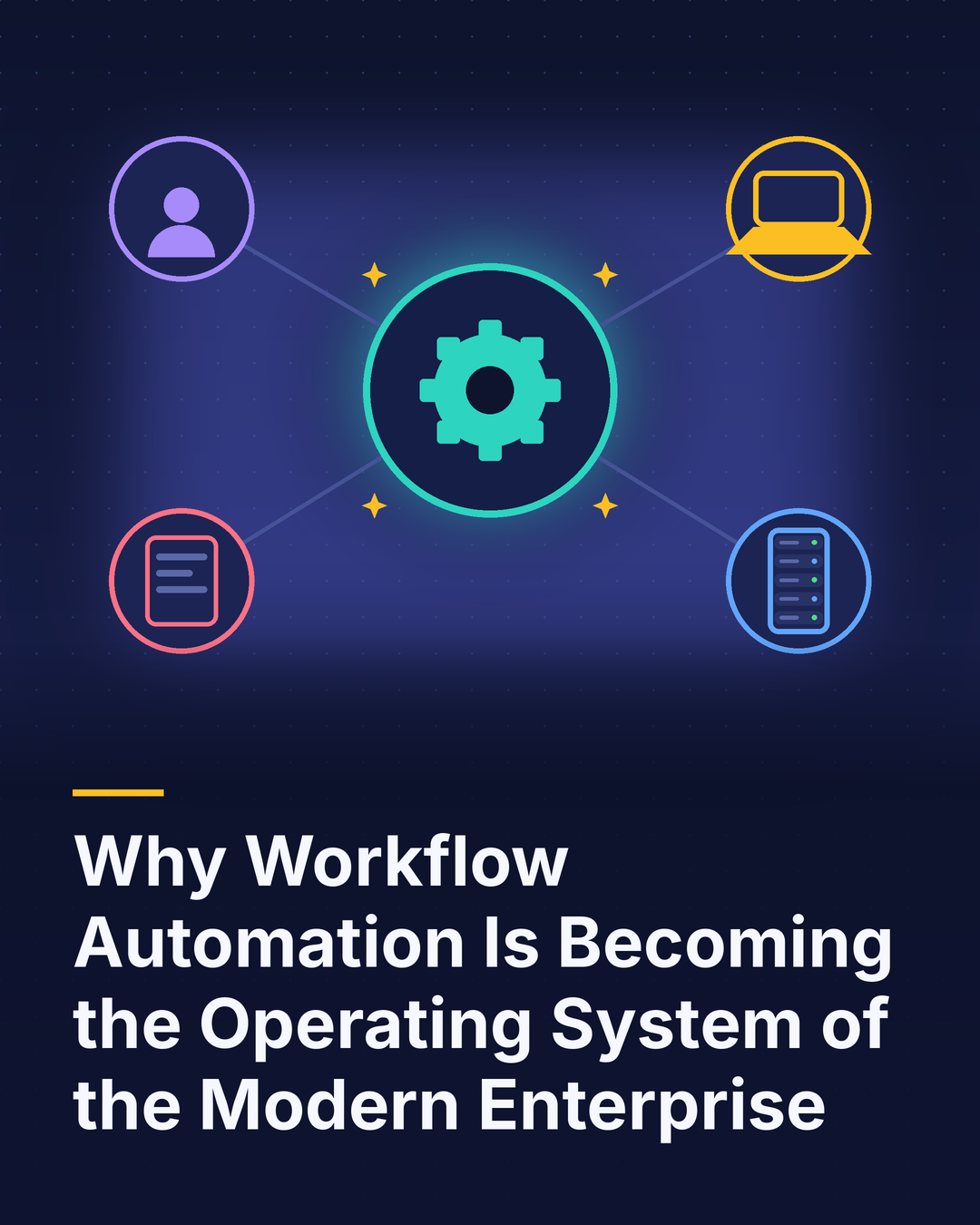
Early in my career, the phrase “operating system” referred to something quite specific: the software layer that sat between hardware and applications, allocating resources and ensuring that each component did its work in an orderly fashion. Today I find the term increasingly useful as a description of something broader. In the modern enterprise, workflow automation is taking on precisely that role, coordinating people, systems and data so that work moves from request to resolution in a predictable way.
From Applications to Workflows
For several decades, enterprises organized technology around applications. Finance had its system, human resources had another, IT had a third and customer service had a fourth. The difficulty is that real work rarely respects departmental boundaries. Onboarding a new employee touches human resources, IT, facilities and security. Resolving a customer complaint may involve service, logistics, billing and engineering.
When the applications are separate, people become the integration layer. They copy information from one screen to another, send emails to request action and follow up by telephone when nothing happens.
Workflow automation changes the unit of design. Instead of asking which application a department needs, organizations ask how a piece of work should flow from beginning to end, and then use a common platform to orchestrate each step, regardless of which system or team performs it.
Why the Shift Is Accelerating Now
Three developments are pushing workflow automation from a departmental tool to a foundational layer.
- Hybrid work has removed the informal corridor conversations that once compensated for broken processes. Work must now be explicit and visible.
- Rising service expectations from employees and customers have made delays far less tolerable. People expect consumer-grade experiences at work.
- Artificial intelligence depends on structured, well-governed processes. An AI agent cannot act reliably in an organization where no one can describe how work actually gets done.
The Characteristics of an Enterprise Workflow Layer
An effective workflow platform shares several characteristics with a traditional operating system. It provides a common data model, so that a request, an asset or a customer means the same thing everywhere. It offers shared services such as approvals, notifications, service-level tracking and audit trails, so that each team does not rebuild them. It enforces security and access controls consistently. And it exposes integration interfaces that allow existing systems of record to participate without being replaced.
In my experience, organizations that treat workflow as a platform rather than a collection of departmental projects achieve considerably better results. Their automations reuse common components and their data remains consistent.
Where to Begin
The most practical starting point is a cross-functional process that is visible, frequent and painful, such as employee onboarding, access requests or order exceptions. Mapping that process end to end usually reveals unnecessary handoffs, duplicated data entry and approval steps that add delay without adding control.
The Bottom Line
Workflow automation is no longer a matter of streamlining individual tasks. It is becoming the layer through which the enterprise coordinates its work, measures its performance and introduces intelligence. Organizations that invest in a coherent workflow foundation now will be far better prepared for the era of AI agents, which will depend on clear processes and trustworthy data to act on the business’s behalf. Those that continue to rely on email, spreadsheets and individual effort to connect their systems will find that complexity grows faster than their ability to manage it. The operating system analogy is apt: few organizations would tolerate an unreliable operating system on their computers, and fewer still should tolerate one at the heart of their business.