
Reskilling vs. Hiring: The Real Cost Comparison for Tech Roles
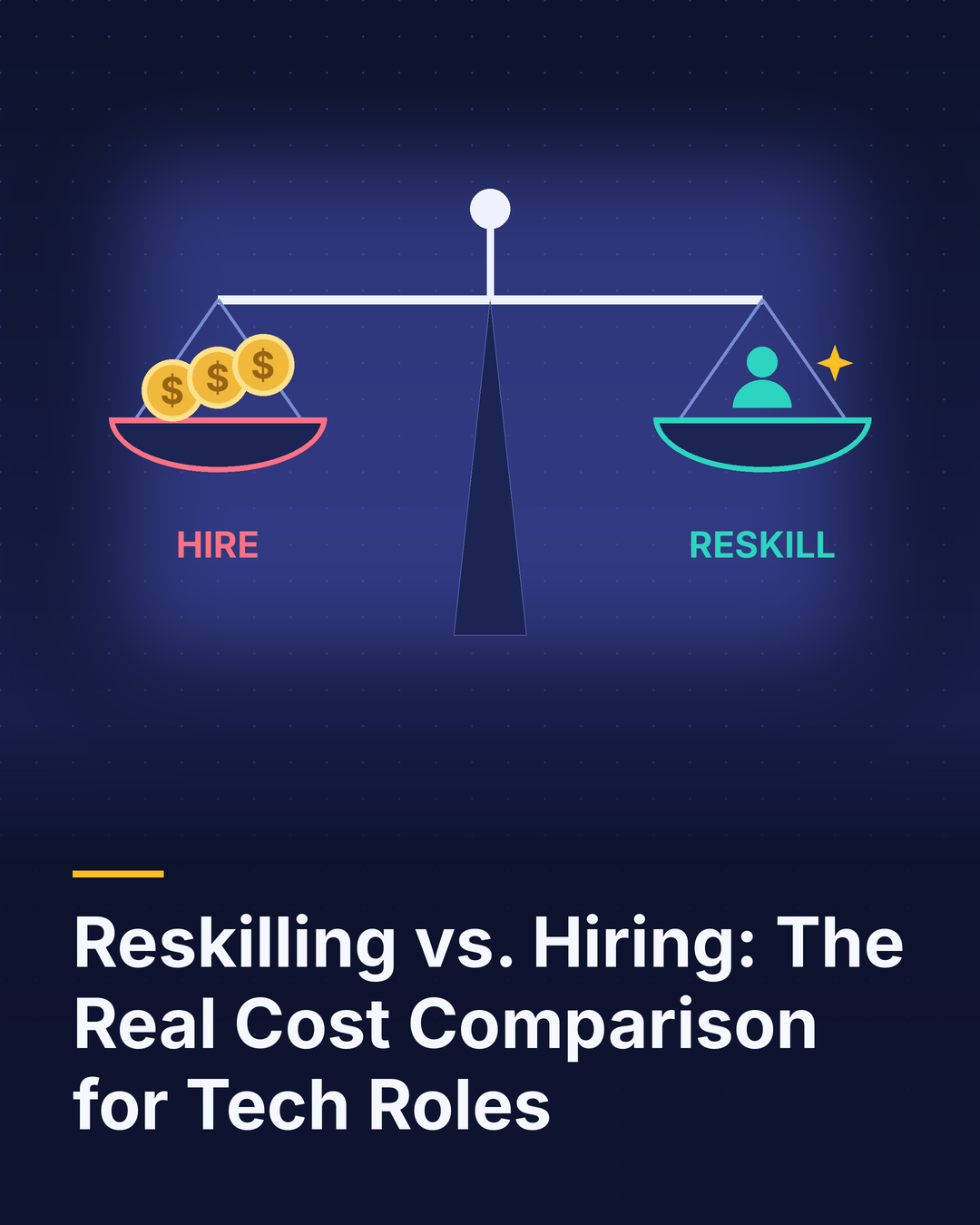
When a company needs a new cloud engineer, data analyst or security specialist, the default move is usually to post the job and start recruiting. It feels like the fastest path. But when you add up the full cost of an external hire, reskilling someone already on the team often comes out ahead, and not by a small margin.
Let’s break down what’s really on the scoreboard.
The Hidden Costs of Hiring
The salary is only the most visible piece. A typical external tech hire also involves:
- Recruiting costs, including agency fees, job board spend and hours of interviewing time from your team
- Time to fill, which for specialized tech roles can stretch for months while the work waits
- Onboarding and ramp-up, since even experienced hires need time to learn your systems, processes and customers
- Salary premiums, because in-demand skills command top-of-market pay
- Turnover risk, as new hires are more likely to leave in their first year than tenured employees
Add those together and the true cost of a single specialized hire can easily climb well beyond the base salary.
What Reskilling Actually Costs
Reskilling has its own investment, of course. There’s the cost of training programs, the time employees spend learning instead of doing their usual work and the support of mentors or managers. But many of those costs are modest, especially with flexible online learning, and the payoff comes with built-in advantages. Reskilled employees already know the business. They already have relationships across teams. And they tend to be deeply loyal to the company that invested in them.
When Each Approach Makes Sense
This isn’t an either-or game. Hiring still makes sense when you need deep, senior expertise immediately or want to bring fresh perspective into a team. Reskilling shines when you need to build broader capability, fill roles that adjacent employees can grow into or future-proof teams as technology evolves. The strongest talent strategies use both, with a clear-eyed look at cost and timing for each role.
The Bottom Line
When companies compare the full cost of hiring, from recruiting fees and time to fill to ramp-up and turnover risk, reskilling often wins on both cost and speed. It also builds loyalty and keeps hard-won business knowledge inside the organization. Hiring will always have a place, but treating reskilling as a first option rather than an afterthought can save serious money. Even better, it sends a powerful message to every employee that growth is possible right where they are.