
Modern ITSM: Moving From Ticket Queues to Proactive Service Delivery
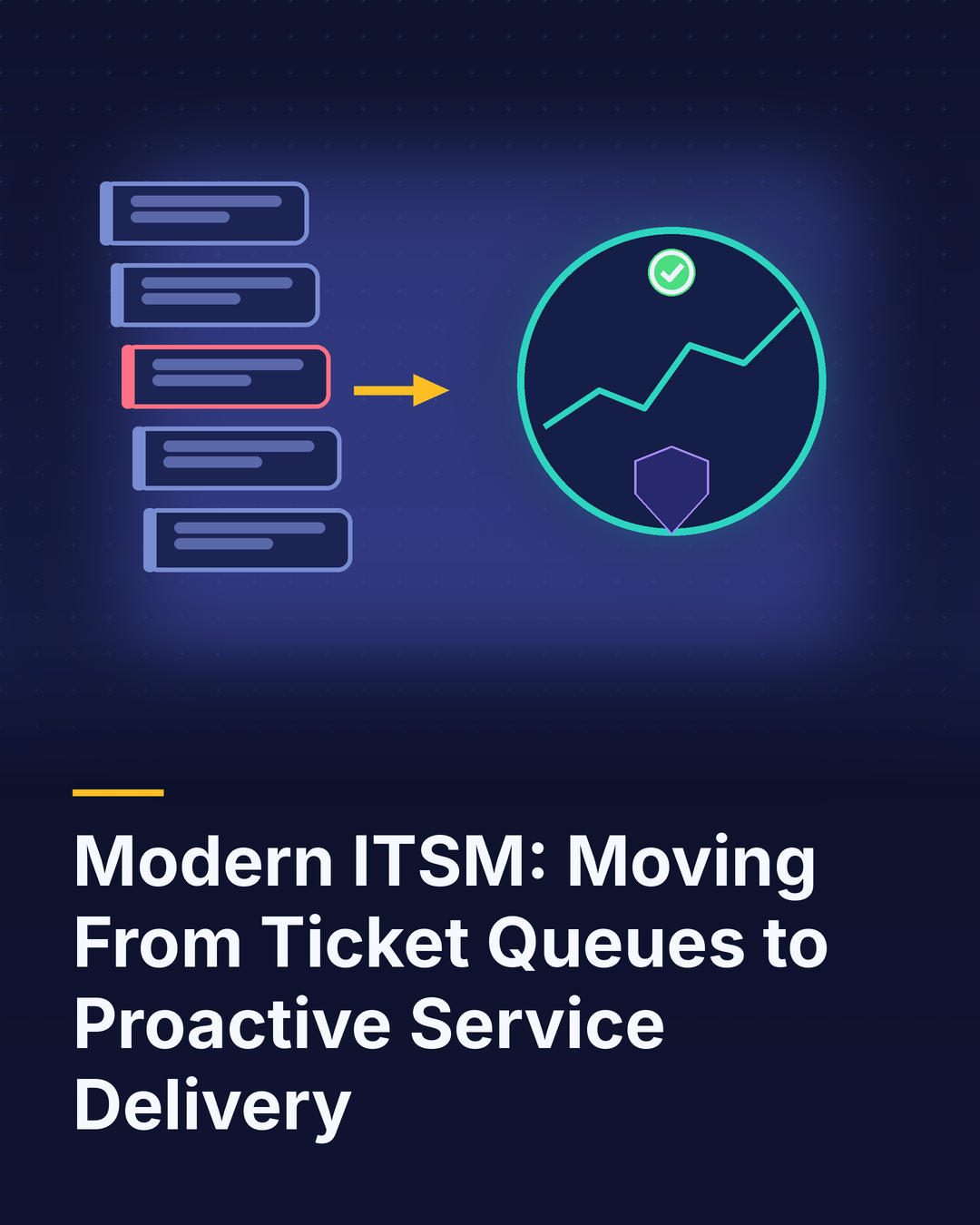
When I first worked alongside IT support teams, the measure of a good service desk was largely how quickly it could respond to a telephone call and close a ticket. The model was fundamentally reactive. Something broke, a user reported it, and the IT team fixed it. Success meant working through the queue efficiently.
That model served its purpose for many years, but it is no longer sufficient. Employees now expect technology to simply work, and when it does not, they expect the problem to be resolved before it affects them. IT service management must evolve accordingly, from managing queues to delivering service proactively.
The Limits of the Reactive Model
A queue-based approach has several inherent weaknesses. It depends on users noticing and reporting problems, which means issues persist until someone is sufficiently inconvenienced to call. It measures activity, such as tickets closed, rather than outcomes, such as productive hours preserved. And it tends to treat recurring incidents individually rather than addressing their underlying causes.
The result is a service desk that is perpetually busy yet rarely improving.
The Characteristics of Proactive Service Delivery
Modern ITSM shifts the emphasis in several important ways.
- Monitoring and event correlation. Infrastructure and application telemetry is analyzed continuously, so that degradations are detected and addressed before users notice.
- Problem management as a priority. Recurring incidents are grouped and investigated so that root causes are eliminated rather than repeatedly worked around.
- Self-service and knowledge. Employees can resolve common issues themselves through a well-maintained portal and knowledge base, available at any hour.
- Automation of routine fulfillment. Password resets, software requests and access changes are completed automatically without agent involvement.
- AI assistance. Intelligent categorization, routing and summarization allow agents to concentrate on complex issues that genuinely require their expertise.
Changing How Success Is Measured
A proactive approach requires different metrics. Rather than focusing on ticket volume and handling time, leaders should track measures such as incidents prevented, the proportion of requests resolved through self-service, mean time to restore critical services and employee satisfaction with IT. A declining ticket count, in this model, is often a sign of success rather than a reduction in workload.
The Role of a Unified Platform
Proactive service delivery depends on connecting monitoring data, configuration information, incident history and knowledge in one place. When these elements reside in separate tools, the correlations that enable prevention are difficult to make. A unified service management platform allows an alert to be linked automatically to the affected services, the responsible team and relevant knowledge, so that action can begin immediately.
In my view, the IT organizations that thrive over the coming decade will be those that see themselves less as a support function and more as a provider of reliable digital services.
The Bottom Line
The traditional ticket queue remains necessary, but it can no longer define IT service management. By combining monitoring, problem management, self-service, automation and AI on a unified platform, IT teams can resolve many issues before users are affected and free their people for more valuable work. This transition also changes IT’s standing within the business, from a cost center that answers calls to a partner that keeps the organization productive. The shift requires investment and new habits, but the reward is a service function that improves continuously rather than simply keeping pace.